
![ADAR Recombinant antilichaam [7H12] (OACA12771)](/_ipx/q_80/productPlaceholder.webp)
ADAR Recombinant antilichaam [7H12] (OACA12771)
Kwaliteit
ISO Gecertificeerd
Levering
24-48 uur
Technische Specificaties
Adenosine deaminase RNA specific
136 kDa double-stranded RNA-binding protein; ADAR1; adenosine deaminase acting on RNA 1-A; AGS6; double-stranded RNA-specific adenosine deaminase; DRADA; DSH; DSRAD; dsRNA adenosine deaminase; dsRNA adeonosine deaminase; G1P1; IFI4; IFI-4; interferon-induced protein 4; interferon-inducible protein 4; K88DSRBP; P136.
103
Human
A synthesized peptide derived from human ADAR1
• Recombinant Monoclonal
Unconjugated
Recombinant Monoclonal Antibody
Affinity Purified
Reconstitution & Storage Instructions Western Blotting/Immunoblotting (WB/IB) Protocol Immunohistochemistry (IHC) Protocol Immunocytochemistry (ICC) Protocol Enzyme-Linked ImmunoSorbent Assay (ELISA) Protocol Blocking Peptide Competition Protocol (BPCP) Immunoprecipitation (IP) Protocol Antibody Array (AA) Protocol Reconstitution & Storage Instructions Reconstitution & Storage Instructions Western Blotting/Immunoblotting (WB/IB) Protocol Western Blotting/Immunoblotting (WB/IB) Protocol Immunohistochemistry (IHC) Protocol Immunohistochemistry (IHC) Protocol Immunocytochemistry (ICC) Protocol Immunocytochemistry (ICC) Protocol Enzyme-Linked ImmunoSorbent Assay (ELISA) Protocol Enzyme-Linked ImmunoSorbent Assay (ELISA) Protocol Blocking Peptide Competition Protocol (BPCP) Blocking Peptide Competition Protocol (BPCP) Immunoprecipitation (IP) Protocol Immunoprecipitation (IP) Protocol Antibody Array (AA) Protocol Antibody Array (AA) Protocol
Catalyzes the hydrolytic deamination of adenosine to inosine in double-stranded RNA (dsRNA) referred to as A-to-I RNA editing (PubMed:7972084, PubMed:7565688, PubMed:12618436) . This may affect gene expression and function in a number of ways that include mRNA translation by changing codons and hence the amino acid sequence of proteins; pre-mRNA splicing by altering splice site recognition sequences; RNA stability by changing sequences involved in nuclease recognition; genetic stability in the case of RNA virus genomes by changing sequences during viral RNA replication; and RNA structure-dependent activities such as microRNA production or targeting or protein-RNA interactions. Can edit both viral and cellular RNAs and can edit RNAs at multiple sites (hyper-editing) or at specific sites (site-specific editing) . Its cellular RNA substrates include: bladder cancer-associated protein (BLCAP), neurotransmitter receptors for glutamate (GRIA2) and serotonin (HTR2C) and GABA receptor (GABRA3) . Site-specific RNA editing of transcripts encoding these proteins results in amino acid substitutions which consequently alters their functional activities. Exhibits low-level editing at the GRIA2 Q/R site, but edits efficiently at the R/G site and HOTSPOT1. Its viral RNA substrates include: hepatitis C virus (HCV), vesicular stomatitis virus (VSV), measles virus (MV), hepatitis delta virus (HDV), and human immunodeficiency virus type 1 (HIV-1) . Exhibits either a proviral (HDV, MV, VSV and HIV-1) or an antiviral effect (HCV) and this can be editing-dependent (HDV and HCV), editing-independent (VSV and MV) or both (HIV-1) . Impairs HCV replication via RNA editing at multiple sites. Enhances the replication of MV, VSV and HIV-1 through an editing-independent mechanism via suppression of EIF2AK2/PKR activation and function. Stimulates both the release and infectivity of HIV-1 viral particles by an editing-dependent mechanism where it associates with viral RNAs and edits adenosines in the 5'UTR and the Rev and Tat coding sequence. Can enhance viral replication of HDV via A-to-I editing at a site designated as amber/W, thereby changing an UAG amber stop codon to an UIG tryptophan (W) codon that permits synthesis of the large delta antigen (L-HDAg) which has a key role in the assembly of viral particles. However, high levels of ADAR1 inhibit HDV replication.
Liquid
-20°C or -80°C
ADAR
Double-stranded RNA-specific adenosine deaminase
ADAR
Beschrijving
ADAR Recombinant antilichaam [7H12] (OACA12771) Beschikbaar in 100 µL. Bestel eenvoudig online met snelle levering.
Specificaties
Recent bekeken producten
Recombinant Common timothy PHLPIV/Phl p 4 Protein, N-His
YZZ03001
100 μg
NP (4-hydroxy-3-nitrophenylacetate)
NP-BSA-03Low – 10 mg
10 mg
NP (4-hydroxy-3-nitrophenylacetate)
NP-BSA-03High – 10 mg
10 mg
ExactaCruz® Pipette Tip Reload System, 50-1250 μl, case
sc-201714
80 Racks/Case
Disc Membrane Hydrophobic PTFE, 0.22μm
CPTB14222
50 PCS
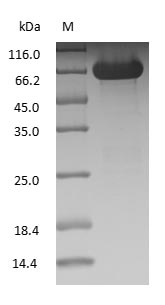
Rat Serum Albumin
CSB-NP000101r-01
1 mg
Denhardt's Solution (50X)
EC-915
50 mL
FKBP4, ID (FK506-binding Protein 4, Peptidyl-prolyl cis-trans Isomerase FKBP4, PPIase FKBP4, Rotamase, HSP-binding Immunophilin, HBI, FKBP52 Protein, 52kD FK506-binding Protein, 52kD FKBP, FKBP-52, 59kD Immunophilin, FKBP59, p59 Protein, FKBP-4, FKBP52)
MBS623609-01
0.2 mL
Recent gezochte producten
Recombinant Common timothy PHLPIV/Phl p 4 Protein, N-His
YZZ03001
100 μg
E030010N08Rik (m) -PR
sc-143217-PR
10 µM - 20 µL
C030019I05Rik siRNA (m)
sc-141806
10 µM
E030019B06Rik (m) -PR
sc-143221-PR
10 µM - 20 µL
C030019I05Rik (m) -PR
sc-141806-PR
10 µM - 20 µL
D030016E14Rik (m) -PR
sc-142768-PR
10 µM - 20 µL
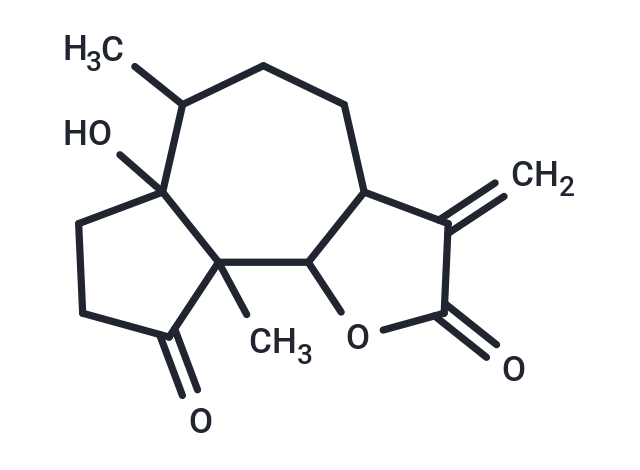
Compound N003-0017
T131382-01
1 mg
Compound N003-0017
MBS5796320
Inquire