![Alpha B Crystalline (CRYAB) Mouse Monoclonal Antibody [Kloon ID: LBI5D8]](/_ipx/q_80/productPlaceholder.webp)
Alpha B Crystalline (CRYAB) Mouse Monoclonal Antibody [Kloon ID: LBI5D8]
Kwaliteit
ISO Gecertificeerd
Levering
24-48 uur
Technische Specificaties
Crystallins are separated into two classes: taxon-specific, or enzyme, and ubiquitous. The latter class constitutes the major proteins of vertebrate eye lens and maintains the transparency and refractive index of the lens. Since lens central fiber cells lose their nuclei during development, these crystallins are made and then retained throughout life, making them extremely stable proteins. Mammalian lens crystallins are divided into alpha, beta, and gamma families; beta and gamma crystallins are also considered as a superfamily. Alpha and beta families are further divided into acidic and basic groups. Seven protein regions exist in crystallins: four homologous motifs, a connecting peptide, and N- and C-terminal extensions. Alpha crystallins are composed of two gene products: alpha-A and alpha-B, for acidic and basic, respectively. Alpha crystallins can be induced by heat shock and are members of the small heat shock protein (sHSP also known as the HSP20) family. They act as molecular chaperones although they do not renature proteins and release them in the fashion of a true chaperone; instead they hold them in large soluble aggregates. Post-translational modifications decrease the ability to chaperone. These heterogeneous aggregates consist of 30-40 subunits; the alpha-A and alpha-B subunits have a 3:1 ratio, respectively. Two additional functions of alpha crystallins are an autokinase activity and participation in the intracellular architecture. Alpha-A and alpha-B gene products are differentially expressed; alpha-A is preferentially restricted to the lens and alpha-B is expressed widely in many tissues and organs. Elevated expression of alpha-B crystallin occurs in many neurological diseases; a missense mutation cosegregated in a family with a desmin-related myopathy. [provided by RefSeq]
Carrier-free (BSA/glycerol-free) CRYAB mouse monoclonal antibody, clone LBI5D8
CMD1II; CRYA2; CTPP2; CTRCT16; HEL-S-101; HSPB5; MFM2
Homo sapiens crystallin alpha B (CRYAB), transcript variant 1, mRNA.
1410
P02511
Unconjugated
WB 1:2000, IF 1:100
Lyophilized powder (original buffer 1X PBS, pH 7.3, 8% trehalose)
Lyophilized powder (original buffer 1X PBS, pH 7.3, 8% trehalose)
Stable for 1 year at -20°C from date of shipment. For maximum recovery of product, centrifuge the original vial after thawing and opening the cap. Aliquot will be stable at 4°C short term. For long-term storage, aliquot and store at -20°C or below. Stable for 12 months at -20°C. Avoid repeated freeze-thaw cycles.
CRYAB
https://www.ncbi.nlm.nih.gov/gene/?term=1410
https://www.uniprot.org/uniprot/P02511
Beschrijving
Alpha B Crystalline (CRYAB) Mouse Monoclonal Antibody [Kloon ID: LBI5D8] Beschikbaar in 100 µg. Bestel eenvoudig online met snelle levering.
Specificaties
Recent bekeken producten
BioCoupler® x 12
BC12
12 Each
Recombinant Common timothy PHLPIV/Phl p 4 Protein, N-His
YZZ03001
100 μg
NP (4-hydroxy-3-nitrophenylacetate)
NP-BSA-03Low – 10 mg
10 mg
NP (4-hydroxy-3-nitrophenylacetate)
NP-BSA-03High – 10 mg
10 mg
ExactaCruz® Pipette Tip Reload System, 50-1250 μl, case
sc-201714
80 Racks/Case
Disc Membrane Hydrophobic PTFE, 0.22μm
CPTB14222
50 PCS
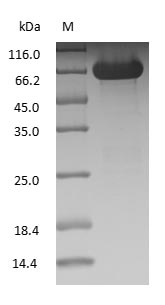
Rat Serum Albumin
CSB-NP000101r-01
1 mg
Denhardt's Solution (50X)
EC-915
50 mL