

Anti-DNA PKcs/PRKDC Antibody Picoband®
Kwaliteit
ISO Gecertificeerd
Levering
24-48 uur
Technische Specificaties
PRKDC (Protein Kinase DNA-Activated Catalytic Subunit), also called DNAPK, HYRC1, p350 or DNPK1, is an enzyme that in humans is encoded by the PRKDC gene. DNA-PKcs belongs to the phosphatidylinositol 3-kinase-related kinase protein family. Satoh et al. (1997) mapped the MCM4 gene to 8q11.2 by FISH. Based on the close proximity of the PRKDC and MCM4 genes, it was assumed that the PRKDC gene also maps to this location. Anderson and Lees-Miller (1992) noted that DNA-PK had been shown in vitro to phosphorylate several transcription factors, suggesting that it functions in cell homeostasis by modulating transcription. Daniel et al. (1999) demonstrated that the PRKDC protein participates in retroviral DNA integration, which is catalyzed by the viral protein integrase.
Boster Bio Anti-DNA PKcs/PRKDC Antibody catalog # PA1970. Tested in WB applications. This antibody reacts with Human. The brand Picoband indicates this is a premium antibody that guarantees superior quality, high affinity, and strong signals with minimal background in Western blot applications. Only our best-performing antibodies are designated as Picoband, ensuring unmatched performance.
DNA-dependent protein kinase catalytic subunit; DNA-PK catalytic subunit; DNA-PKcs;2.7.11.1; DNPK1; p460; PRKDC; HYRC, HYRC1
PRKDC
5591
P78527
• Rabbit
Human, Mouse, Rat
No cross-reactivity with other proteins
A synthetic peptide corresponding to a sequence at the N-terminus of human DNA PKcs.
• Polyclonal
Type I isoforms are the predominant forms expressed in the endocardium. Isoform alpha is expressed in breast, ovary, testis, prostate, heart, skeletal muscle, lung, placenta liver, kidney, salivary gland, small intestine and brain, but not in uterus, stomach, pancreas, and spleen. Isoform 3 is the predominant form in mesenchymal cells and in non-neuronal organs, whereas isoform 6 is the major neuronal form. Isoform 8 is expressed in spinal cord and brain. Isoform 9 is the major form in skeletal muscle cells; in the nervous system it is expressed in spinal cord and brain. Also detected in adult heart, placenta, lung, liver, kidney, and pancreas. Isoform 10 is expressed in nervous system: spinal cord motor neurons, dorsal root ganglion neurons, and brain. Predominant isoform expressed in sensory and motor neurons. Not detected in adult heart, placenta, lung, liver, skeletal muscle, kidney, and pancreas. Not expressed in fetal lung, liver and kidney. Type IV isoforms are brain-specific. .
WB
2339, DNA/RNA, DNA Damage & Repair, DNA Damage Response, Epigenetics and Nuclear Signaling
Immunogen affinity purified.
Adding 0.2 ml of distilled water will yield a concentration of 500 μg/ml.
Lyophilized
Add 0.2ml of distilled water will yield a concentration of 500ug/ml.
Serine/threonine-protein kinase that acts as a molecular sensor for DNA damage. Involved in DNA non-homologous end joining (NHEJ) required for double-strand break (DSB) repair and V (D) J recombination. Must be bound to DNA to express its catalytic properties. Promotes processing of hairpin DNA structures in V (D) J recombination by activation of the hairpin endonuclease artemis (DCLRE1C) . The assembly of the DNA-PK complex at DNA ends is also required for the NHEJ ligation step. Required to protect and align broken ends of DNA. May also act as a scaffold protein to aid the localization of DNA repair proteins to the site of damage. Found at the ends of chromosomes, suggesting a further role in the maintenance of telomeric stability and the prevention of chromosomal end fusion. Also involved in modulation of transcription. Recognizes the substrate consensus sequence [ST]-Q. Phosphorylates 'Ser-139' of histone variant H2AX/H2AFX, thereby regulating DNA damage response mechanism. Phosphorylates DCLRE1C, c-Abl/ABL1, histone H1, HSPCA, c-jun/JUN, p53/TP53, PARP1, POU2F1, DHX9, SRF, XRCC1, XRCC1, XRCC4, XRCC5, XRCC6, WRN, MYC and RFA2. Can phosphorylate C1D not only in the presence of linear DNA but also in the presence of supercoiled DNA. Ability to phosphorylate p53/TP53 in the presence of supercoiled DNA is dependent on C1D. Contributes to the determination of the circadian period length by antagonizing phosphorylation of CRY1 'Ser-588' and increasing CRY1 protein stability, most likely through an in machanism. Interacts with CRY1 and CRY2; negatively regulates CRY1 phosphorylation. .
1. Anderson, C. W., Lees-Miller, S. P. The nuclear serine/threonine protein kinase DNA-PK. Crit. Rev. Eukaryot. Gene Expr. 2: 283-314, 1992. 2. Daniel, R., Katz, R. A., Skalka, A. M. A role for DNA-PK in retroviral DNA integration. Science 284: 644-647, 1999. 3. Satoh, T., Tsuruga, H., Yabuta, N., Ishidate, M., Jr., Nojima, H. Assignment of the human CDC21 (MCM4) gene to chromosome 8q11.2. Genomics 46: 525-526, 1997.
Store at -20°C for one year from date of receipt. After reconstitution, at 4°C for one month. It can also be aliquotted and stored frozen at -20°C for six months. Avoid repeated freeze-thaw cycles.
https://www.bosterbio.com/msds?sku=PA1970
469089 MW
460 kDa
No cross reactivity with other proteins.
Western blot, 0.1-0.5μg/mL, Human<br> Immunohistochemistry (Paraffin-embedded Section), 2-5μg/mL, Human, Mouse, Rat<br>
DNA-dependent protein kinase catalytic subunit
Nucleus. Nucleus, nucleolus.
Belongs to the PI3/PI4-kinase family.
DNA-dependent protein kinase catalytic subunit
Rabbit IgG
Each vial contains 5mg BSA, 0.9mg NaCl, 0.2mg Na2HPO4, 0.05mg Thimerosal, 0.05mg NaN3.
Beschrijving
Boster Bio Anti-DNA PKcs/PRKDC Antibody catalog # PA1970. Tested in WB applications. This antibody reacts with Human. The brand Picoband indicates this is a pre
Specificaties
Recent bekeken producten

Arachis hypogaea Lectin (PNA) - Biotinylated
21510020-1
5mg
1,4- Dioxane Pure
1041330 500
500 mL
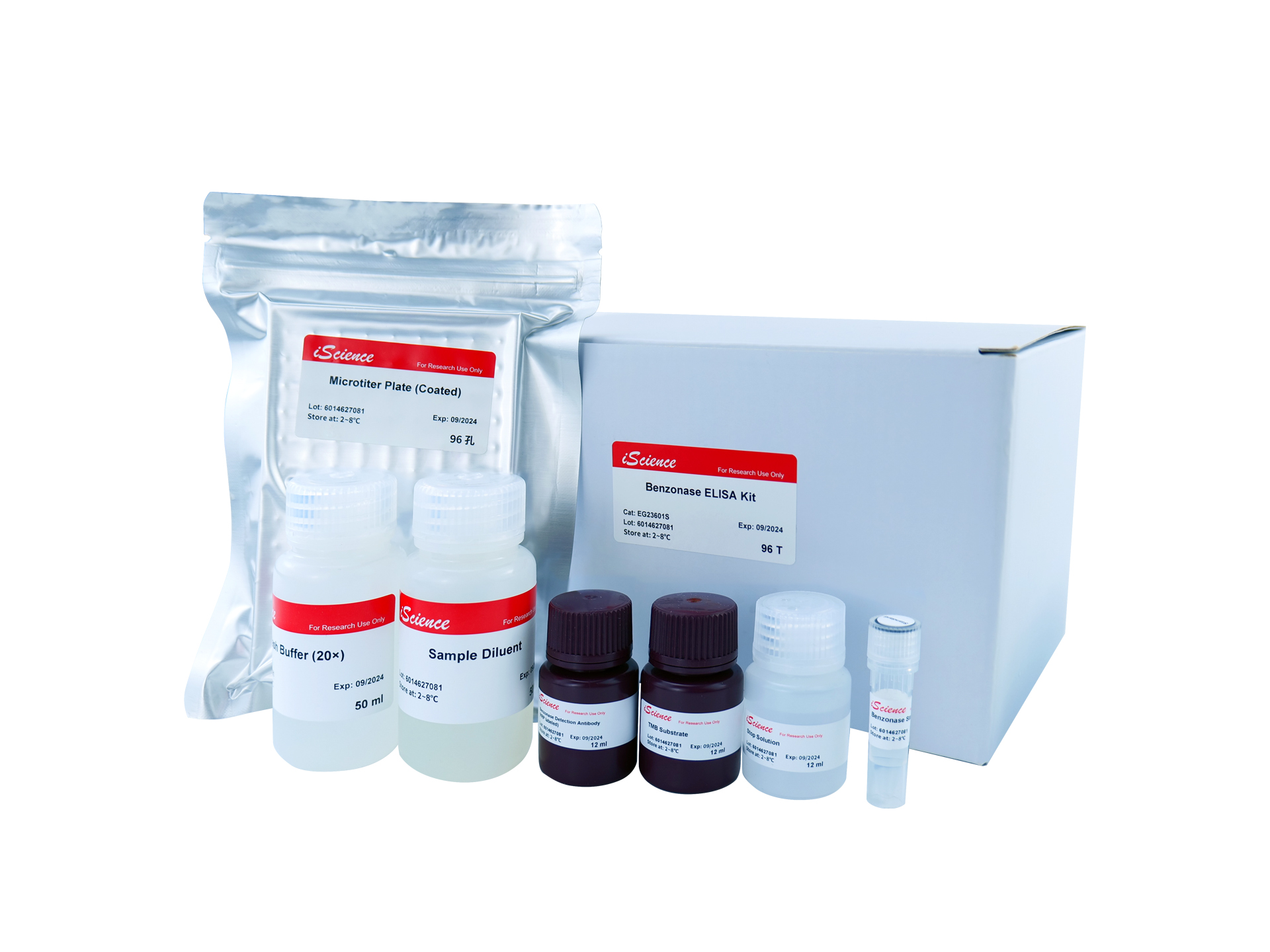
Benzonase ELISA Kit
EG23601S
96 Tests

Not I Restriction Enzyme
B2016623
500 Units
K562-HLA-G0101 Overexpressing Cell Line
RG-1214
5x 10^6
Yeast Poly (A) Polymerase
RNT-006-S
30000 Units
Arachis hypogaea lectin (PNA)
05-0116-10mg
10 mg
Anti-APOE2 mouse monoclonal antibody
TD-AB0132
100 µg