

Anti-Hsp90 alpha/HSP90AA1 Antibody Picoband® 0,00647 Vervoeging
Kwaliteit
ISO Gecertificeerd
Levering
24-48 uur
Technische Specificaties
Heat shock protein HSP 90-alpha?is a?protein?that in humans is encoded by the?HSP90AA1?gene. The gene, HSP90AA1, encodes the human stress-inducible 90-kDa heat shock protein alpha (Hsp90A) . Complemented by the constitutively expressed paralog Hsp90B which shares over 85% amino acid sequence identity, Hsp90A expression is initiated when a cell experiences proteotoxic stress. Once expressed Hsp90A dimers operate as molecular chaperones that bind and fold other proteins into their functional 3-dimensional structures. This molecular chaperoning ability of Hsp90A is driven by a cycle of structural rearrangements fueled by ATP hydrolysis. Current research on Hsp90A focuses in its role as a drug target due to its interaction with a large number of tumor promoting proteins and its role in cellular stress adaptation.
Heat shock protein HSP 90-alpha; Heat shock 86 kDa; HSP 86; HSP86; Lipopolysaccharide-associated protein 2; LAP-2; LPS-associated protein 2; Renal carcinoma antigen NY-REN-38; HSP90AA1; HSP90A, HSPC1, HSPCA
HSP90AA1
3320
P07900
• Rabbit
Human, Mouse, Rat
No cross-reactivity with other proteins
E.coli-derived human Hsp90 alpha recombinant protein (Position: P2-V365) . Human Hsp90 alpha shares 99% amino acid (aa) sequence identity with both mouse and rat Hsp90 alpha.
• Polyclonal
Isoform 1 is widely expressed, other isoforms are generally coexpressed with a more restricted distribution. Isoform 2 is expressed in skin, liver, skeletal muscle, cardiac muscle, placenta, umbilical vein endothelial cells, neuroblastoma cells, lymphoma cells, hepatoma cells and astrocytoma cells. Isoform 3 and isoform 4 are expressed in muscle, kidney, liver, placenta, cervical epithelium, umbilical vein endothelial cells, fibroblast cells, embryonal kidney cells, platelets and several blood cell lines. Isoform 4, rather than isoform 3, is selectively expressed in peripheral T-cells. Isoform 3 is expressed in non- proliferating and differentiated prostate gland epithelial cells and in platelets, on the surface of erythroleukemia cells and in various hematopoietic cell lines. Isoform 5 is expressed specifically in striated muscle (skeletal and cardiac muscle) . .
Flow Cytometry
Cancer, Chaperones, Heat Shock Proteins, Protein Trafficking, Signal Transduction, Tumor Biomarkers
Immunogen affinity purified.
Liquid
Molecular chaperone that promotes the maturation, structural maintenance and proper regulation of specific target proteins involved for instance in cell cycle control and signal transduction. Undergoes a functional cycle that is linked to its ATPase activity. This cycle probably induces conformational changes in the client proteins, thereby causing their activation. Interacts dynamically with various co-chaperones that modulate its substrate recognition, ATPase cycle and chaperone function. Binds bacterial lipopolysaccharide (LPS) et mediates LPS-induced inflammatory response, including TNF secretion by monocytes. .
1. Csermely P, Schnaider T, Soti C, Prohászka Z, Nardai G (August 1998) . The 90-kDa molecular chaperone family: structure, function, and clinical applications. A comprehensive review. Pharmacol. Ther. 79 (2) : 129–68. 2. Sollars, V., Lu, X., Xiao, L., Wang, X., Garfinkel, M. D., Ruden, D. M. Evidence for an epigenetic mechanism by which Hsp90 acts as a capacitor for morphological evolution. Nature Genet. 33: 70-74, 2003. 3. Solit, D. B., Zheng, F. F., Drobnjak, M., Munster, P. N., Higgins, B., Verbel, D., Heller, G., Tong, W., Cordon-Cardo, C., Agus, D. B., Scher, H. I., Rosen, N. 7-Allylamino-17-demethoxygeldanamycin induces the degradation of androgen receptor and HER-2/neu and inhibits the growth of prostate cancer xenografts. Clin. Cancer Res. 8: 986-993, 2002.
At -20 ̊C for one year from date of receipt. Avoid repeated freezing and thawing. Protect from light.
84660 MW
No cross reactivity with other proteins.
6
Heat shock protein HSP 90-alpha
Cytoplasm. Melanosome. Cell membrane. Identified by mass spectrometry in melanosome fractions from stage I to stage IV.
Contains 1 RHD (Rel-like) domain.
Heat shock protein HSP 90-alpha
Rabbit IgG
Each vial contains 50% glycerol, 0.9% NaCl, 0.2% Na2HPO4, 0.02% NaN3.
Beschrijving
Anti-Hsp90 alpha/HSP90AA1 Antibody Picoband® 0,00647 Vervoeging Beschikbaar in 100 µg/Vial. Bestel eenvoudig online met snelle levering.
Specificaties
Recent bekeken producten
Cellubrevin Antibody
MBS9436639-01
0.05 mL
Oxidative Stress Combo Assay Tissue Kit
EA-7008
1 Each
Arachis hypogaea Lectin (PNA) - Biotinylated
21510020-1
5mg
1,4- Dioxane Pure
1041330 500
500 mL
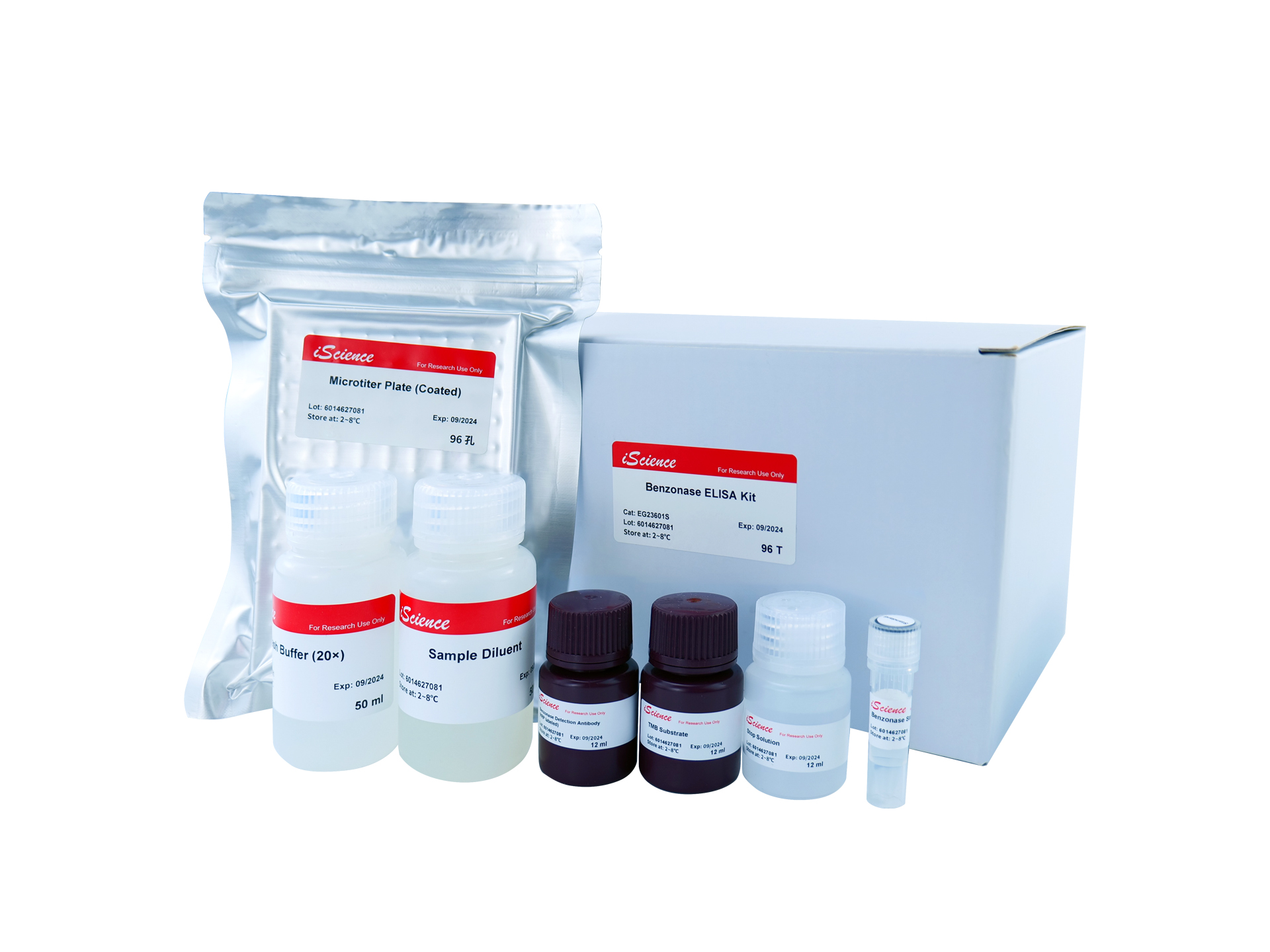
Benzonase ELISA Kit
EG23601S
96 Tests

Not I Restriction Enzyme
B2016623
500 Units
K562-HLA-G0101 Overexpressing Cell Line
RG-1214
5x 10^6
Yeast Poly (A) Polymerase
RNT-006-S
30000 Units
Recent gezochte producten
Cellubrevin Antibody
MBS9436639-01
0.05 mL
Rat Oxidative Stress Primer Library
ROSL-I
1 set
DTNB (Ellman’s) Thiol Oxidative Stress Assay
1021
1 Kit
OSR1 (Oxidative Stress Responsive 1)
MBS616581-01
0.1 mL
Oxidative Stress Combo Assay Cell Kit
EA-7006
1 Each
Oxidative Stress Combo Assay Blood Kit
EA-7007
1 Each
Oxidative Stress Combo Assay Tissue Kit
EA-7008
1 Each
OSR1 (Oxidative Stress Responsive 1)
O8054
100 µL