

Anti-HSP90 Monoklonale Antilichaam (Kloon: H9010)
Kwaliteit
ISO Gecertificeerd
Levering
24-48 uur
Technische Specificaties
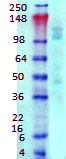
HSP90 is an abundantly and ubiquitously expressed heat shock protein. It is understood to exist in two principal forms alpha and beta, which share 85% sequence amino acid homology. The two isoforms of HSP90, are expressed in the cytosolic compartment. Despite the similarities, HSP90 alpha exists predominantly as a homodimer while HSP90 beta exists mainly as a monomer. From a functional perspective, HSP90 participates in the folding, assembly, maturation, and stabilization of specific proteins as an integral component of a chaperone complex. Furthermore, HSP90 is highly conserved between species; having 60% and 78% amino acid similarity between mammalian and the corresponding yeast and Drosophila proteins, respectively. HSP90 is a highly conserved and essential stress protein that is expressed in all eukaryotic cells. Despite it's label of being a heat-shock protein, HSP90 is one of the most highly expressed proteins in unstressed cells (1€“2% of cytosolic protein) . It carries out a number of housekeeping functions €“ including controlling the activity, turnover, and trafficking of a variety of proteins. Most of the HSP90-regulated proteins that have been discovered to date are involved in cell signaling. The number of proteins now know to interact with HSP90 is about 100. Target proteins include the kinases v-Src, Wee1, and c-Raf, transcriptional regulators such as p53 and steroid receptors, and the polymerases of the hepatitis B virus and telomerase. When bound to ATP, HSP90 interacts with co-chaperones Cdc37, p23, and an assortment of immunophilin-like proteins, forming a complex that stabilizes and protects target proteins from proteasomal degradation. In most cases, HSP90-interacting proteins have been shown to co-precipitate with HSP90 when carrying out immunoadsorption studies, and to exist in cytosolic heterocomplexes with it. In a number of cases, variations in HSP90 expression or HSP90 mutation has been shown to degrade signaling function via the protein or to impair a specific function of the protein (such as steroid binding, kinase activity) in vivo. Ansamycin antibiotics, such as geldanamycin and radicicol, inhibit HSP90 function.
HSP90AB1||HSP90B||HSPC2||HSPCB
HSP90AB1
3326
P08238
• Mouse
Dog, Rat, Mouse, Human, Rabbit
Recombinant human HSP90beta
• Monoclonal
H9010
IP, ELISA, ICC/IF, IHC, WB
Protein G Purified
PBS pH7.2, 50% glycerol, 0.09% sodium azide
Store the antibody at 4°C; stable for 6 months. For long-term storage; store at -20°C. Avoid repeated freeze and thaw cycles.
WB (1:2500), IHC (1:100) ; optimal dilutions for assays should be determined by the user.
Mouse IgG2a
Unconjugated
Beschrijving
HSP90 is an abundantly and ubiquitously expressed heat shock protein. It is understood to exist in two principal forms alpha and beta, which share 85% sequence
Specificaties
Recent bekeken producten
Recombinant TAFV GP1 Protein, C-Fc
EVV03609
100 μg
Gabbr1 Mouse Monoclonal Antibody [Clone ID: S93A-49]
TA326530
100 µg
BSA-Myc/DDK Control Protein
AR100025
50 µL
NH-6
ABC-TC0826
1 Vial
Anti-TAT (Thrombin-antithrombin) Antibody
ABS 014-22-1
1000 µL
Anti-APOE2 mouse monoclonal antibody
TD-AB0132
100 µg
CD35 (CR1) mouse monoclonal antibody, clone J3D3, Azide Free
BM2364
0.2 mg
Anti-KIR2DL1 (Rabbit, Monoclonal, Rabbit mAb)
A115392
100 µL
Recent gezochte producten
Recombinant TAFV GP1 Protein, C-Fc
EVV03609
100 μg
Fluorescein Conjugated Affinity Purified Anti-MOUSE IgG + IgM (H&L) (GOAT) Minimum Cross Reactivity to Bovine, Horse and Human S
GWB-5CB439
1 mg
Horse Polyclonal Horse anti-Goat IgG ImmPRESS(TM) Secondary Antibody [HRP Polymer]
MP-7405-NB-50mL
50 mL
Horse Polyclonal Horse anti-Rabbit IgG ImmPRESS(TM) Secondary Antibody [HRP Polymer]
MP-7401-NB-15mL
15 mL
Horse Polyclonal Horse anti-Mouse IgG ImmPRESS(TM) Secondary Antibody [AP Polymer]
MP-5402-NB-50mL
50 mL
Horse Polyclonal Horse anti-Goat IgG ImmPRESS(TM) Secondary Antibody [HRP Polymer]
MP-7405-NB-15mL
15 mL
Horse Polyclonal Horse anti-Mouse ImmPRESS(TM) VR Secondary Antibody [HRP Polymer]
MP-6402-NB
15 mL
Horse Polyclonal Horse anti-Mouse IgG ImmPRESS(TM) Secondary Antibody [AP Polymer]
MP-5402-NB-15mL
15 mL