

Anti-SART1 Antibody Picoband® 0,00647 Vervoeging
Kwaliteit
ISO Gecertificeerd
Levering
24-48 uur
Technische Specificaties
U4/U6.U5 tri-snRNP-associated protein 1 is a protein that in humans is encoded by the SART1 gene. This gene encodes two proteins, the SART1 (800) protein expressed in the nucleus of the majority of proliferating cells, and the SART1 (259) protein expressed in the cytosol of epithelial cancers. The SART1 (259) protein is translated by the mechanism of -1 frameshifting during posttranscriptional regulation; its full-length sequence is not published yet. The two encoded proteins are thought to be involved in the regulation of proliferation. Both proteins have tumor-rejection antigens. The SART1 (259) protein possesses tumor epitopes capable of inducing HLA-A2402-restricted cytotoxic T lymphocytes in cancer patients. This SART1 (259) antigen may be useful in specific immunotherapy for cancer patients and may serve as a paradigmatic tool for the diagnosis and treatment of patients with atopy. The SART1 (259) protein is found to be essential for the recruitment of the tri-snRNP to the pre-spliceosome in the spliceosome assembly pathway.
POU domain, class 4, transcription factor 1
SART1
9092
O43290
• Rabbit
Human, Mouse, Rat
No cross-reactivity with other proteins.
E.coli-derived human SART1 recombinant protein (Position: K125-K800) .
• Polyclonal
Expressed in the brain and the retina. Present in the developing brain, spinal cord and eye.
Flow Cytometry
Cell Type Marker, Developmental Families, Domain Families, Epigenetics and Nuclear Signaling, Neurogenesis, Neurology Process, Neuroscience, Transcription
Immunogen affinity purified.
Liquid
Multifunctional transcription factor with different regions mediating its different effects. Acts by binding (via its C-terminal domain) to sequences related to the consensus octamer motif 5'-ATGCAAAT-3' in the regulatory regions of its target genes. Regulates the expression of specific genes involved in differentiation and survival within a subset of neuronal lineages. It has been shown that activation of some of these genes requires its N-terminal domain, maybe through a neuronal-specific cofactor. Ativates BCL2 expression and protects neuronal cells from apoptosis (via the N-terminal domain) . Induces neuronal process outgrowth and the coordinate expression of genes encoding synaptic proteins. Exerts its major developmental effects in somatosensory neurons and in brainstem nuclei involved in motor control. Stimulates the binding affinity of the nuclear estrogene receptor ESR1 to DNA estrogen response element (ERE), and hence modulates ESR1-induced transcriptional activity. May positively regulate POU4F2 and POU4F3. Regulates dorsal root ganglion sensory neuron specification and axonal projection into the spinal cord. Plays a role in TNFSF11-mediated terminal osteoclast differentiation. Negatively regulates its own expression interacting ly with a highly conserved autoregulatory domain surrounding the transcription initiation site.
1. Gross, M. B. Personal Communication. Baltimore, Md. 3/1/2021. 2. Kittler, R., Putz, G., Pelletier, L., Poser, I., Heninger, A.-K., Drechsel, D., Fischer, S., Konstantinova, I., Habermann, B., Grabner, H., Yaspo, M.-L., Himmelbauer, H., Korn, B., Neugebauer, K., Pisabarro, M. T., Buchholz, F. An endoribonuclease-prepared siRNA screen in human cells identifies genes essential for cell division. Nature 432: 1036-1040, 2004. 3. Makarova, O. V., Makarov, E. M., Luhrmann, R. The 65 and 110 kDa SR-related proteins of the U4/U6-U5 tri-snRNP are essential for the assembly of mature spliceosomes. EMBO J. 20: 2553-2563, 2001.
At -20 ̊C for one year from date of receipt. Avoid repeated freezing and thawing. Protect from light.
39411 MW
6
POU class 4 homeobox 1
Nucleus.
Zinc finger protein Helios
Rabbit IgG
Each vial contains 50% glycerol, 0.9% NaCl, 0.2% Na2HPO4, 0.02% NaN3.
Beschrijving
Anti-SART1 Antibody Picoband® 0,00647 Vervoeging Beschikbaar in 100 µg/Vial. Bestel eenvoudig online met snelle levering.
Specificaties
Recent bekeken producten
Parvovirus B19
OT020
1 Each
Anti- Protein A Antibody
GWB-E66F30
1 mL
Recombinant TAFV GP1 Protein, C-Fc
EVV03609
100 μg
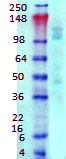
Gabbr1 Mouse Monoclonal Antibody [Clone ID: S93A-49]
TA326530
100 µg
BSA-Myc/DDK Control Protein
AR100025
50 µL
NH-6
ABC-TC0826
1 Vial
Anti-TAT (Thrombin-antithrombin) Antibody
ABS 014-22-1
1000 µL
Anti-APOE2 mouse monoclonal antibody
TD-AB0132
100 µg