

Antisrc Antibody Picoband® fluoro594 Vervoeging
Kwaliteit
ISO Gecertificeerd
Levering
24-48 uur
Technische Specificaties
Sarcoma (Scr) is a proto-oncogenic tyrosine kinase originally discovered by J. Michael Bishop and Harold E. Varmus. belongs to a family of non-receptor tyrosine kinases called Src family kinases. The human SRC protooncogene was assigned to chromosome 20. Its gene is mapped to 20q12-q13. The discovery of Src family proteins has been instrumental to the modern understanding of cancer as a disease where normally healthy cellular signalling has gone awry. This proto-oncogene may play a role in the regulation of embryonic development and cell growth.
Proto-oncogene tyrosine-protein kinase Src;2.7.10.2; Proto-oncogene c-Src; pp60c-src; p60-Src; SRC; SRC1
SRC
6714
P12931
• Rabbit
Human
No cross-reactivity with other proteins
E.coli-derived human Src recombinant protein (Position: G2-D368) . Human Src shares 97% and 99% amino acid (aa) sequences identity with mouse and rat Src, respectively.
• Polyclonal
Expressed ubiquitously. Platelets, neurons and osteoclasts express 5-fold to 200-fold higher levels than most other tissues.
Flow Cytometry
Protein Phosphorylation, Signal Transduction, Tyrosine Kinases
Immunogen affinity purified.
Liquid
Non-receptor protein tyrosine kinase which is activated following engagement of many different classes of cellular receptors including immune response receptors, integrins and other adhesion receptors, receptor protein tyrosine kinases, G protein- coupled receptors as well as cytokine receptors. Participates in signaling pathways that control a diverse spectrum of biological activities including gene transcription, immune response, cell adhesion, cell cycle progression, apoptosis, migration, and transformation. Due to functional redundancy between members of the SRC kinase family, identification of the specific role of each SRC kinase is very difficult. SRC appears to be one of the primary kinases activated following engagement of receptors and plays a role in the activation of other protein tyrosine kinase (PTK) families. Receptor clustering or dimerization leads to recruitment of SRC to the receptor complexes where it phosphorylates the tyrosine residues within the receptor cytoplasmic domains. Plays an important role in the regulation of cytoskeletal organization through phosphorylation of specific substrates such as AFAP1. Phosphorylation of AFAP1 allows the SRC SH2 domain to bind AFAP1 and to localize to actin filaments. Cytoskeletal reorganization is also controlled through the phosphorylation of cortactin (CTTN) . When cells adhere via focal adhesions to the extracellular matrix, signals are transmitted by integrins into the cell resulting in tyrosine phosphorylation of a number of focal adhesion proteins, including PTK2/FAK1 and paxillin (PXN) . In addition to phosphorylating focal adhesion proteins, SRC is also active at the sites of cell-cell contact adherens junctions and phosphorylates substrates such as beta-catenin (CTNNB1), delta-catenin (CTNND1), and plakoglobin (JUP) . Another type of cell-cell junction, the gap junction, is also a target for SRC, which phosphorylates connexin- 43 (GJA1) . SRC is implicated in regulation of pre-mRNA-processing and phosphorylates RNA-binding proteins such as KHDRBS1. Also plays a role in PDGF-mediated tyrosine phosphorylation of both STAT1 and STAT3, leading to increased DNA binding activity of these transcription factors. Involved in the RAS pathway through phosphorylation of RASA1 and RASGRF1. Plays a role in EGF-mediated calcium-activated chloride channel activation. Required for epidermal growth factor receptor (EGFR) internalization through phosphorylation of clathrin heavy chain (CLTC and CLTCL1) at 'Tyr- 1477'. Involved in beta-arrestin (ARRB1 and ARRB2) desensitization through phosphorylation and activation of ADRBK1, leading to beta- arrestin phosphorylation and internalization. Has a critical role in the stimulation of the CDK20/MAPK3 mitogen-activated protein kinase cascade by epidermal growth factor. Might be involved not only in mediating the transduction of mitogenic signals at the level of the plasma membrane but also in controlling progression through the cell cycle via interaction with regulatory proteins in the nucleus. Plays an important role in osteoclastic bone resorption in conjunction with PTK2B/PYK2. Both the formation of a SRC-PTK2B/PYK2 complex and SRC kinase activity are necessary for this function. Recruited to activated integrins by PTK2B/PYK2, thereby phosphorylating CBL, which in turn induces the activation and recruitment of phosphatidylinositol 3-kinase to the cell membrane in a signaling pathway that is critical for osteoclast function. Promotes energy production in osteoclasts by activating mitochondrial cytochrome C oxidase. Phosphorylates DDR2 on tyrosine residues, thereby promoting its subsequent autophosphorylation. Phosphorylates RUNX3 and COX2 on tyrosine residues, TNK2 on 'Tyr-284' and CBL on 'Tyr-731'. Enhances DDX58/RIG-I-elicited antiviral signaling. Phosphorylates PDPK1 at 'Tyr-9', 'Tyr-373' and 'Tyr-376'. Phosphorylates BCAR1 at 'Tyr- 128'. Phosphorylates CBLC at multiple tyrosine residues, phosphorylation at 'Tyr-341' activates CBLC E3 activity. .
1. Nobel Prize in Physiology or Medicine for 1989 jointly to J. Michael Bishop and Harold E. Varmus for their discovery of the cellular origin of retroviral oncogenes. Press Release. 2. Entrez Gene: SRC v-src sarcoma (Schmidt-Ruppin A-2) viral oncogene homolog (avian) . 3. Gibbs, C. P., Tanaka, A., Anderson, S. K., Radul, J., Baar, J., Ridgway, A., Kung, H.-J., Fujita, D. J.Isolation and structural mapping of a human c-src gene homologous to the transforming gene (v-src) of Rous sarcoma virus.J. Virol.53: 19-24, 1985.
At -20 ̊C for one year from date of receipt. Avoid repeated freezing and thawing. Protect from light.
59835 MW
No cross reactivity with other proteins.
6
Proto-oncogene tyrosine-protein kinase Src
Cell membrane. Mitochondrion inner membrane. Nucleus. Cytoplasm, cytoskeleton. Localizes to focal adhesion sites following integrin engagement. Localization to focal adhesion sites requires myristoylation and the SH3 domain.
Belongs to the protein kinase superfamily. Tyr protein kinase family. SRC subfamily.
Proto-oncogene tyrosine-protein kinase Src
Rabbit IgG
Each vial contains 50% glycerol, 0.9% NaCl, 0.2% Na2HPO4, 0.02% NaN3.
Beschrijving
Antisrc Antibody Picoband® fluoro594 Vervoeging Beschikbaar in 100 µg/Vial. Bestel eenvoudig online met snelle levering.
Specificaties
Recent bekeken producten
Cellubrevin Antibody
MBS9436639-01
0.05 mL
Oxidative Stress Combo Assay Tissue Kit
EA-7008
1 Each
Arachis hypogaea Lectin (PNA) - Biotinylated
21510020-1
5mg
1,4- Dioxane Pure
1041330 500
500 mL
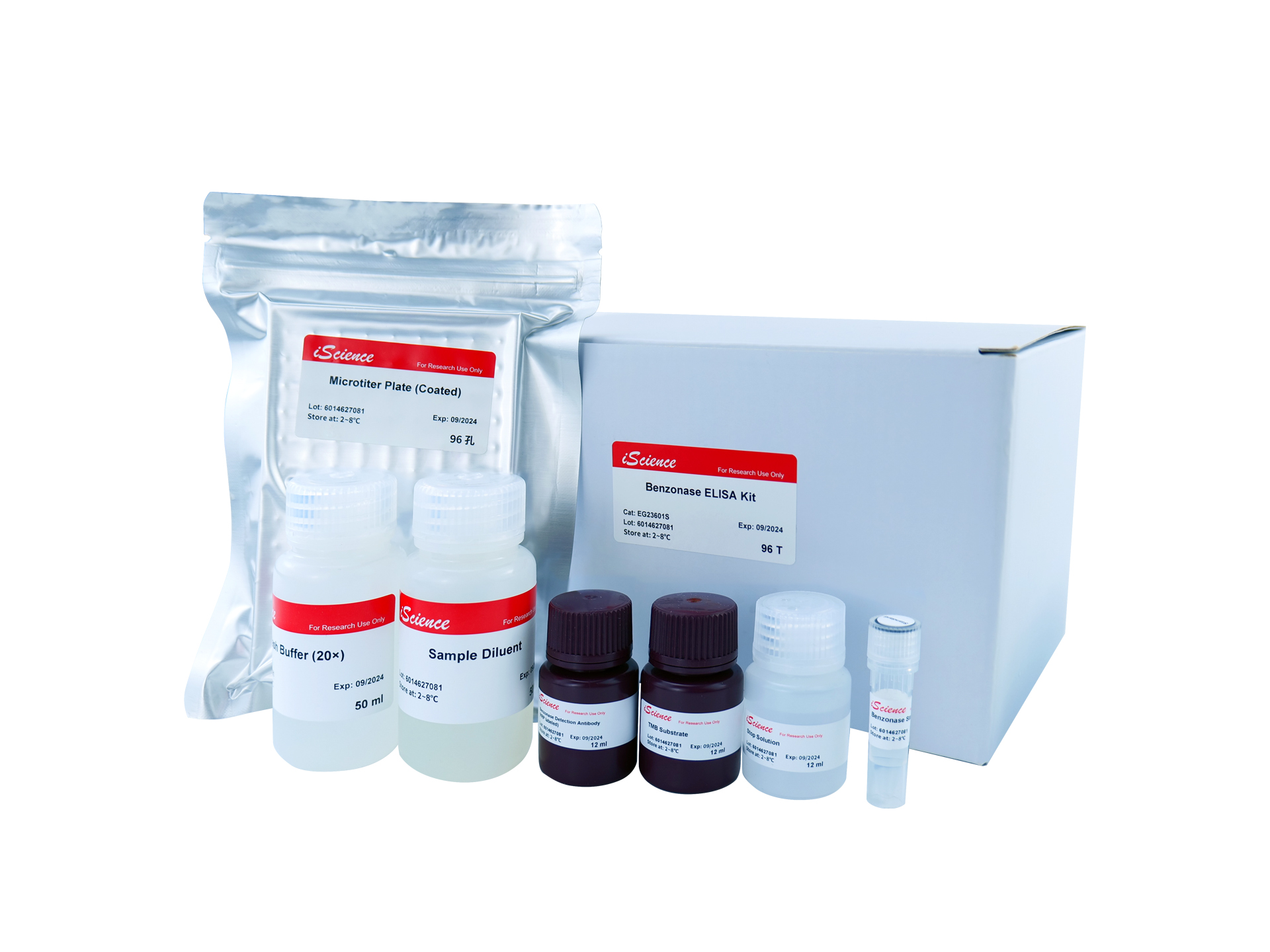
Benzonase ELISA Kit
EG23601S
96 Tests

Not I Restriction Enzyme
B2016623
500 Units
K562-HLA-G0101 Overexpressing Cell Line
RG-1214
5x 10^6
Yeast Poly (A) Polymerase
RNT-006-S
30000 Units
Recent gezochte producten
Cellubrevin Antibody
MBS9436639-01
0.05 mL
Rat Oxidative Stress Primer Library
ROSL-I
1 set
DTNB (Ellman’s) Thiol Oxidative Stress Assay
1021
1 Kit
OSR1 (Oxidative Stress Responsive 1)
MBS616581-01
0.1 mL
Oxidative Stress Combo Assay Cell Kit
EA-7006
1 Each
Oxidative Stress Combo Assay Blood Kit
EA-7007
1 Each
Oxidative Stress Combo Assay Tissue Kit
EA-7008
1 Each
OSR1 (Oxidative Stress Responsive 1)
O8054
100 µL