

CD4-eiwit (hFc-dag)
Kwaliteit
ISO Gecertificeerd
Levering
24-48 uur
Technische Specificaties
T-cell surface glycoprotein CD4, is a single-pass type I membrane protein. CD4 contains three Ig-like C2-type (immunoglobulin-like) domains and one Ig-like V-type (immunoglobulin-like) domain. CD4 is a glycoprotein expressed on the surface of T helper cells, regulatory T cells, monocytes, macrophages, and dendritic cells. The CD4 surface determinant, previously associated as a phenotypic marker for helper/inducer subsets of T lymphocytes, has now been critically identified as the binding/entry protein for human immunodeficiency viruses (HIV) . The human CD4 molecule is readily detectable on monocytes, T lymphocytes, and brain tissues. All human tissue sources of CD4 bind radiolabeled gp120 to the same relative degree; however, the murine homologous protein, L3T4, does not bind the HIV envelope protein. CD4 is a co-receptor that assists the T cell receptor (TCR) to activate its T cell following an interaction with an antigen-presenting cell. Using its portion that resides inside the T cell, CD4 amplifies the signal generated by the TCR. CD4 interacts directly with MHC class II molecules on the surface of the antigen-presenting cell via its extracellular domain. The CD4 molecule is currently the object of intense interest and investigation both because of its role in normal T-cell function, and because of its role in HIV infection. CD4 is a primary receptor used by HIV-1 to gain entry into host T cells. HIV infection leads to a progressive reduction of the number of T cells possessing CD4 receptors. Viral protein U (VpU) of HIV-1 plays an important role in downregulation of the main HIV-1 receptor CD4 from the surface of infected cells. Physical binding of VpU to newly synthesized CD4 in the endoplasmic reticulum is an early step in a pathway leading to proteasomal degradation of CD4. Amino acids in both helices found in the cytoplasmic region of VpU in membrane-mimicking detergent micelles experience chemical shift perturbations upon binding to CD4, whereas amino acids between the two helices and at the C-terminus of VpU show no or only small changes, respectively. Paramagnetic spin labels were attached at three sequence positions of a CD4 peptide comprising the transmembrane and cytosolic domains of the receptor. VpU binds to a membrane-proximal region in the cytoplasmic domain of CD4.
Cd4 Protein; L3T4 Protein; Ly-4 Protein
NP_038516.1
Mouse
Mouse
HFc-Tag
See Datasheet send with the product
< 1.0 EU per μg protein as determined by the LAL method.
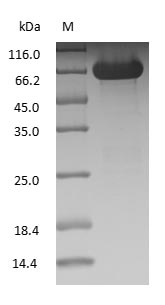
≥ 95 % as determined by SDS-PAGE. ≥ 90 % as determined by SEC-HPLC.
Data not available
606
Lyophilized or frozen liquid
PBS, pH 7.4
See Datasheet
106 kDa (glycosylated)
Samples are stable for up to twelve months from date of receipt at -20°C to -80°C. Store it under sterile conditions at -20°C to -80°C. It is recommended that the protein be aliquoted for optimal storage. Avoid repeated freeze-thaw cycles.
HEK 293 cells
Beschrijving
T-cell surface glycoprotein CD4, is a single-pass type I membrane protein. CD4 contains three Ig-like C2-type (immunoglobulin-like) domains and one Ig-like V-ty
Specificaties
Recent bekeken producten
Recombinant Common timothy PHLPIV/Phl p 4 Protein, N-His
YZZ03001
100 μg
NP (4-hydroxy-3-nitrophenylacetate)
NP-BSA-03Low – 10 mg
10 mg
NP (4-hydroxy-3-nitrophenylacetate)
NP-BSA-03High – 10 mg
10 mg
ExactaCruz® Pipette Tip Reload System, 50-1250 μl, case
sc-201714
80 Racks/Case
Disc Membrane Hydrophobic PTFE, 0.22μm
CPTB14222
50 PCS
Rat Serum Albumin
CSB-NP000101r-01
1 mg
Denhardt's Solution (50X)
EC-915
50 mL
FKBP4, ID (FK506-binding Protein 4, Peptidyl-prolyl cis-trans Isomerase FKBP4, PPIase FKBP4, Rotamase, HSP-binding Immunophilin, HBI, FKBP52 Protein, 52kD FK506-binding Protein, 52kD FKBP, FKBP-52, 59kD Immunophilin, FKBP59, p59 Protein, FKBP-4, FKBP52)
MBS623609-01
0.2 mL
Recent gezochte producten
Recombinant Common timothy PHLPIV/Phl p 4 Protein, N-His
YZZ03001
100 μg
E030010N08Rik (m) -PR
sc-143217-PR
10 µM - 20 µL
C030019I05Rik siRNA (m)
sc-141806
10 µM
E030019B06Rik (m) -PR
sc-143221-PR
10 µM - 20 µL
C030019I05Rik (m) -PR
sc-141806-PR
10 µM - 20 µL
D030016E14Rik (m) -PR
sc-142768-PR
10 µM - 20 µL
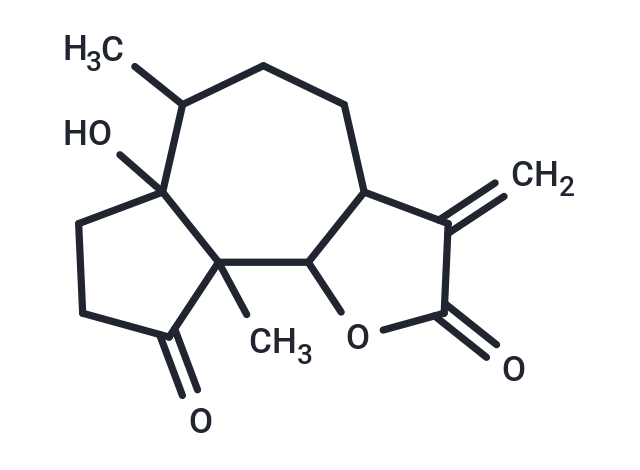
Compound N003-0017
T131382-01
1 mg
Compound N003-0017
MBS5796320
Inquire