

FGF-BP-1
Kwaliteit
ISO Gecertificeerd
Levering
24-48 uur
Technische Specificaties
The Fibroblast Growth Factor (FGF) Superfamily is comprised of multifunctional proteins that serves to regulate several complex biological processes related to the development, restoration, and/or redistribution of prenatal and postnatal tissue, as well as angiogenesis, wound healing, nerve regeneration, chronic inflammation, and cancer growth. Members of the FGF Superfamily function through paracrine, autocrine and intracrine pathways to promote spatial and temporal integrations of several cell responses, such as proliferation, growth, differentiation, and migration. Fibroblast growth factor binding protein 1 (FGF-BP-1) is a secreted glycoprotein, which contains both a heparin-binding domain and a distinct FGF-binding region, that is shed into circulation where it acts as a chaperone molecule for FGFs, most notably FGF-acidic and FGF-basic. Once secreted, FGF-BP-1 can bind FGFs in a reversible manner to mobilize them from inactive storage on heparan sulfate proteoglycans in the extracellular matrix, and deliver them to high affinity receptors on the cell surface where they can exert biological function, all the while protecting against proteolytic degradation. Expressed within the squamous epithelium, FGF-BP-1 functions synergistically with FGFs as a mitogen for keratinocytes and an antagonist for angiogenesis under normal physiological conditions and instances of tissue repair, while also acting as an angiogenic switch for the malignant progression of epithelial cells. First discovered at elevated levels within A431 human epidermoid carcinoma cells, FGF-BP-1 is also expressed at elevated levels in many squamous cell carcinomas and tumors where it has been shown to be a rate-determining factor, interacting with the heparan sulfate proteoglycan perlecan to potentiate neovascularization of tumor masses. Recombinant Human FGF-BP-1 expressed in E.coli is a 24.0 kDa protein containing 212 amino acid residues.
Fibroblast growth factor binding protein 1; FGF-BP; FGF-binding protein 1; HBp17
9982
Q14512.1
NP_005121.1
NM_005130.4
4p15.32
Human
Human
MKKKVKNGLH SKVVSEQKDT LGNTQIKQKS RPGNKGKFVT KDQANCRWAA TEQEEGISLK VECTQLDHEF SCVFAGNPTS CLKLKDERVY WKQVARNLRS QKDICRYSKT AVKTRVCRKD FPESSLKLVS STLFGNTKPR KEKTEMSPRE HIKGKETTPS SLAVTQTMAT KAPECVEDPD MANQRKTALE FCGETWSSLC TFFLSIVQDT SC
≥ 95% by SDS-PAGE gel and HPLC analyses.
Determined by the dose-dependent stimulation of thymidine uptake by BaF3 cells expressing FGF receptors. The expected ED50 for this effect is 1.5-3.0 μg/ml.
212
Lyophilized
24.0 kDa
E. coli
Beschrijving
The Fibroblast Growth Factor (FGF) Superfamily is comprised of multifunctional proteins that serves to regulate several complex biological processes related to
Specificaties
Recent bekeken producten
Ligation Buffer
LB001
1.4 mL
BioCoupler® x 12
BC12
12 Each
Recombinant Common timothy PHLPIV/Phl p 4 Protein, N-His
YZZ03001
100 μg
NP (4-hydroxy-3-nitrophenylacetate)
NP-BSA-03Low – 10 mg
10 mg
NP (4-hydroxy-3-nitrophenylacetate)
NP-BSA-03High – 10 mg
10 mg
ExactaCruz® Pipette Tip Reload System, 50-1250 μl, case
sc-201714
80 Racks/Case
Disc Membrane Hydrophobic PTFE, 0.22μm
CPTB14222
50 PCS
Rat Serum Albumin
CSB-NP000101r-01
1 mg
Recent gezochte producten
NIT2 Human qPCR Primer Pair (NM_020202)
HP213556
200 Reactions
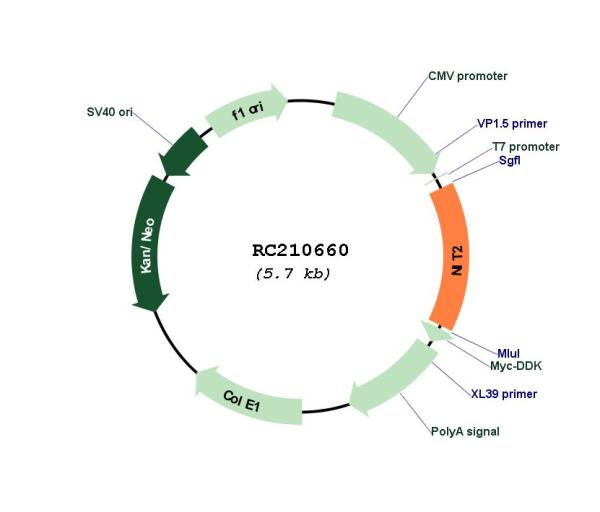
NIT2 (NM_020202) Human Tagged ORF Clone
RC210660
10 µg
Human NIT2 (NM_020202) AAV Particle
RC210660A1V
250 µL
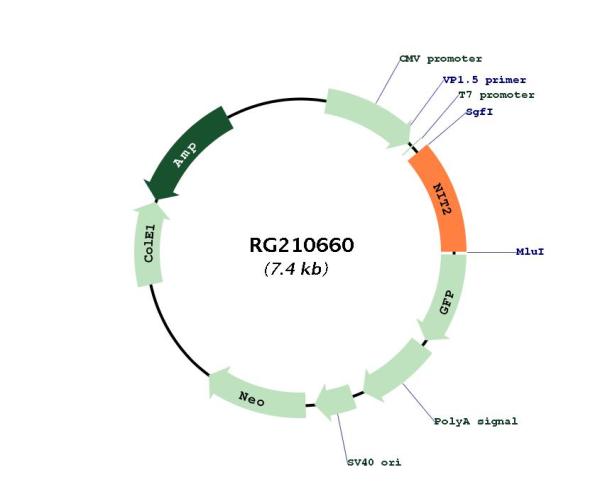
NIT2 (NM_020202) Human Tagged ORF Clone
RG210660
10 µg
NIT2 (NM_020202) Human Untagged Clone
SC108295
10 µg
NIT2 (NM_020202) Human 3' UTR Clone
SC204925
10 µg
LHX9 (NM_020204) Human 3' UTR Clone
SC210775
10 µg
Anti-h ST2 10202 SPTN-5
MBS5680565-01
1 mg