

Follistat likeprote1 / FSTL1
Kwaliteit
ISO Gecertificeerd
Levering
24-48 uur
Technische Specificaties
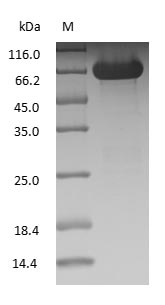
Follistatin-like protein 1 (FSTL1) is a widely-expressed, extracellular glycoprotein that is homologously grouped into the osteonectin (BM-40/SPARC) family of secreted proteins based on its possession of both a follistatin-like and extracellular calcium-binding domain. Initially identified as a TGF-beta-inducible protein in a cloned mouse osteoblast cell line, FSTL1 has since been implicated in an array of cell-type-specific functions, such as the regulation of proliferation, differentiation, apoptosis and migration, as well as a number of biological processes, including embryonic development, inflammatory response, angiogenesis, tumorigenesis, and immune disease pathogenesis. Highly conserved across mammalian species and widely expressed in human tissues, FSTL1 can be upregulated through signaling mediators of the innate immune system, such as TLR4 agonists and the arthritogenic cytokine IL-1beta via NFκB pathways, to stimulate the expression and secretion of pro-inflammatory cytokines, including TNF-alpha, IL-1beta, IL-6 and IL-8. While cells of mesenchymal lineage are capable of FSTL1 production, FSTL1 expression is notably absent from cells of hematopoietic lineage under normal physiological conditions. Macrophages and monocytes are, however, capable of taking up FSTL1 at sites of inflammation where FSTL1 stimulation can cause the expression of caspase-1 and its resultant enzymatic cleavage of active IL-1beta from pro-IL-1beta. Whereas the overexpression of FSTL1 has been noted as a substantial contributor to the progression of immune diseases like rheumatoid arthritis (RA) and osteoarthritis (OA), diminished FSTL1 serum levels have been identified as playing a significant part in both ovarian and endometrial carcinogenesis, where it directly affects cell proliferation, migration and invasion. The CHO cell-derived recombinant human FSTL1 is a 288-amino-acid-length glycoprotein with a calculated molecular weight of 32.7 kDa; however, due to glycosylation, protein migration occurs at an apparent molecular weight of approximately 50-55 kDa by SDS-PAGE analysis under both reducing and non-reducing conditions.
Follistatin-like protein 1, FSL1, Follistatin-related protein 1, FRP, OCC1, OCC-1, TGF-β1-stimulated clone 36, TSC-36
11167
Q12841
NP-009016.1
NM_007085.4
Human
Human
EEELRSKSKI CANVFCGAGR ECAVTEKGEP TCLCIEQCKP HKRPVCGSNG KTYLNHCELH RDACLTGSKI QVDYDGHCKE KKSVSPSASP VVCYQSNRDE LRRRIIQWLE AEIIPDGWFS KGSNYSEILD KYFKNFDNGD SRLDSSEFLK FVEQNETAIN ITTYPDQENN KLLRGLCVDA LIELSDENAD WKLSFQEFLK CLNPSFNPPE KKCALEDETY ADGAETEVDC NRCVCACGNW VCTAMTCDGK NQKGAQTQTE EEMTRYVQEL QKHQETAEKT KRVSTKEI
< 0.1 ng/µg of protein (< 1EU/µg)
> 95% by SDS-PAGE & HPLC analyses
Measured by its binding ability in a functional ELISA. When recombinant human Follistatin like 1/FSTL1 is coated at 200 ng/well, the concentration of recombinant human BMP-4 that produces 50% of the optimal binding response is found to be approximately 250 ng/mL.
288
Lyophilized
50-55 kDa
CHO cells
Beschrijving
Follistatin-like protein 1 (FSTL1) is a widely-expressed, extracellular glycoprotein that is homologously grouped into the osteonectin (BM-40/SPARC) family of s
Specificaties
Recent bekeken producten
Recombinant Common timothy PHLPIV/Phl p 4 Protein, N-His
YZZ03001
100 μg
NP (4-hydroxy-3-nitrophenylacetate)
NP-BSA-03Low – 10 mg
10 mg
NP (4-hydroxy-3-nitrophenylacetate)
NP-BSA-03High – 10 mg
10 mg
ExactaCruz® Pipette Tip Reload System, 50-1250 μl, case
sc-201714
80 Racks/Case
Disc Membrane Hydrophobic PTFE, 0.22μm
CPTB14222
50 PCS
Rat Serum Albumin
CSB-NP000101r-01
1 mg
Denhardt's Solution (50X)
EC-915
50 mL
FKBP4, ID (FK506-binding Protein 4, Peptidyl-prolyl cis-trans Isomerase FKBP4, PPIase FKBP4, Rotamase, HSP-binding Immunophilin, HBI, FKBP52 Protein, 52kD FK506-binding Protein, 52kD FKBP, FKBP-52, 59kD Immunophilin, FKBP59, p59 Protein, FKBP-4, FKBP52)
MBS623609-01
0.2 mL
Recent gezochte producten
Recombinant Common timothy PHLPIV/Phl p 4 Protein, N-His
YZZ03001
100 μg
E030010N08Rik (m) -PR
sc-143217-PR
10 µM - 20 µL
C030019I05Rik siRNA (m)
sc-141806
10 µM
E030019B06Rik (m) -PR
sc-143221-PR
10 µM - 20 µL
C030019I05Rik (m) -PR
sc-141806-PR
10 µM - 20 µL
D030016E14Rik (m) -PR
sc-142768-PR
10 µM - 20 µL
Compound N003-0017
T131382-01
1 mg
Compound N003-0017
MBS5796320
Inquire