
![Insulinereceptor-alfa Recombinant antilichaam [83-14] (OAAV00137)](/_ipx/q_80/productPlaceholder.webp)
Insulinereceptor-alfa Recombinant antilichaam [83-14] (OAAV00137)
Kwaliteit
ISO Gecertificeerd
Levering
24-48 uur
Technische Specificaties
Insulin receptor
CD220; HHF5; insulin receptor; IR.
3643
Q14116
NP_000199.2
Human
Epitope within amino acids 140-301 (the cysteine rich region) of the extracellular domain of the human Insulin Receptor alpha.
This chimeric rabbit antibody was made using the variable domain sequences of the original murine IgG1 format, for improved compatibility with existing reagents, assays and techniques.
• Recombinant Monoclonal
83-7
Recombinant Monoclonal Antibody
Purified
Reconstitution & Storage Instructions Western Blotting/Immunoblotting (WB/IB) Protocol Immunohistochemistry (IHC) Protocol Immunocytochemistry (ICC) Protocol Enzyme-Linked ImmunoSorbent Assay (ELISA) Protocol Blocking Peptide Competition Protocol (BPCP) Immunoprecipitation (IP) Protocol Antibody Array (AA) Protocol Reconstitution & Storage Instructions Reconstitution & Storage Instructions Western Blotting/Immunoblotting (WB/IB) Protocol Western Blotting/Immunoblotting (WB/IB) Protocol Immunohistochemistry (IHC) Protocol Immunohistochemistry (IHC) Protocol Immunocytochemistry (ICC) Protocol Immunocytochemistry (ICC) Protocol Enzyme-Linked ImmunoSorbent Assay (ELISA) Protocol Enzyme-Linked ImmunoSorbent Assay (ELISA) Protocol Blocking Peptide Competition Protocol (BPCP) Blocking Peptide Competition Protocol (BPCP) Immunoprecipitation (IP) Protocol Immunoprecipitation (IP) Protocol Antibody Array (AA) Protocol Antibody Array (AA) Protocol
Receptor tyrosine kinase which mediates the pleiotropic actions of insulin. Binding of insulin leads to phosphorylation of several intracellular substrates, including, insulin receptor substrates (IRS1, 2, 3, 4), SHC, GAB1, CBL and other signaling intermediates. Each of these phosphorylated proteins serve as docking proteins for other signaling proteins that contain Src-homology-2 domains (SH2 domain) that specifically recognize different phosphotyrosine residues, including the p85 regulatory subunit of PI3K and SHP2. Phosphorylation of IRSs proteins lead to the activation of two main signaling pathways: the PI3K-AKT/PKB pathway, which is responsible for most of the metabolic actions of insulin, and the Ras-MAPK pathway, which regulates expression of some genes and cooperates with the PI3K pathway to control cell growth and differentiation. Binding of the SH2 domains of PI3K to phosphotyrosines on IRS1 leads to the activation of PI3K and the generation of phosphatidylinositol- (3, 4, 5) -triphosphate (PIP3), a lipid second messenger, which activates several PIP3-dependent serine/threonine kinases, such as PDPK1 and subsequently AKT/PKB. The net effect of this pathway is to produce a translocation of the glucose transporter SLC2A4/GLUT4 from cytoplasmic vesicles to the cell membrane to facilitate glucose transport. Moreover, upon insulin stimulation, activated AKT/PKB is responsible for: anti-apoptotic effect of insulin by inducing phosphorylation of BAD; regulates the expression of gluconeogenic and lipogenic enzymes by controlling the activity of the winged helix or forkhead (FOX) class of transcription factors. Another pathway regulated by PI3K-AKT/PKB activation is mTORC1 signaling pathway which regulates cell growth and metabolism and integrates signals from insulin. AKT mediates insulin-stimulated protein synthesis by phosphorylating TSC2 thereby activating mTORC1 pathway. The Ras/RAF/MAP2K/MAPK pathway is mainly involved in mediating cell growth, survival and cellular differentiation of insulin. Phosphorylated IRS1 recruits GRB2/SOS complex, which triggers the activation of the Ras/RAF/MAP2K/MAPK pathway. In addition to binding insulin, the insulin receptor can bind insulin-like growth factors (IGFI and IGFII) . Isoform Short has a higher affinity for IGFII binding. When present in a hybrid receptor with IGF1R, binds IGF1. PubMed:12138094 shows that hybrid receptors composed of IGF1R and INSR isoform Long are activated with a high affinity by IGF1, with low affinity by IGF2 and not significantly activated by insulin, and that hybrid receptors composed of IGF1R and INSR isoform Short are activated by IGF1, IGF2 and insulin. In contrast, PubMed:16831875 shows that hybrid receptors composed of IGF1R and INSR isoform Long and hybrid receptors composed of IGF1R and INSR isoform Short have similar binding characteristics, both bind IGF1 and have a low affinity for insulin.
PBS with 0.02% Proclin 300.
Store at 4C for up to 3 months. For longer storage, aliquot and store at -20C.
IgG, kappa
Recognises the extracellular domain of the Insulin Receptor alpha.
INSR
Rabbit
Insulin receptor
INSR
NM_000208.3
Beschrijving
Insulinereceptor-alfa Recombinant antilichaam [83-14] (OAAV00137) Beschikbaar in 200 µg. Bestel eenvoudig online met snelle levering.
Specificaties
Recent bekeken producten
Disc Membrane Hydrophobic PTFE, 0.22μm
CPTB14222
50 PCS
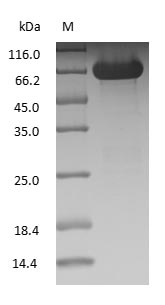
Rat Serum Albumin
CSB-NP000101r-01
1 mg
Denhardt's Solution (50X)
EC-915
50 mL
FKBP4, ID (FK506-binding Protein 4, Peptidyl-prolyl cis-trans Isomerase FKBP4, PPIase FKBP4, Rotamase, HSP-binding Immunophilin, HBI, FKBP52 Protein, 52kD FK506-binding Protein, 52kD FKBP, FKBP-52, 59kD Immunophilin, FKBP59, p59 Protein, FKBP-4, FKBP52)
MBS623609-01
0.2 mL
West Nile Virus, NS3 Protease (WNV)
MBS603723-01
0.1 mg
Human Sertoli Cell Complete Medium
MBS2576755-01
100 mL
Urobilinogen protein
MBS5303823-01
100 mg
AffiniPure Goat Anti-Rabbit IgG H&L, HRP conjugated
GTR17765564-01
100 µL
Recent gezochte producten
Disc Membrane Hydrophobic PTFE, 0.22μm
CPTB2522
200 PCS
Disc Membrane Hydrophobic PTFE, 0.22μm
CPTB4722
200 PCS
Disc Membrane Hydrophobic PTFE, 0.22μm
CPTB9022
50 PCS
Disc Membrane Hydrophobic PTFE, 0.22μm
CPTB14222
50 PCS
HYDROPHOBIC PTFE
ASF130-22-PTFE
100 PCS/Box
HYDROPHOBIC PTFE
ASF250-22-PTFE
100 PCS/Box
HYDROPHOBIC PTFE
ASF250-45-PTFE
100 PCS/Box
HYDROPHOBIC PTFE
ASF330-22-PTFE
100 PCS/Box