

PTPN2 Antilichaam - N-terminaal gebied: Biotine (ARP45362 T100-Biotine)
Kwaliteit
ISO Gecertificeerd
Levering
24-48 uur
Technische Specificaties
Protein tyrosine phosphatase, non-receptor type 2
PTN2, PTPT, TCPTP, TC-PTP, TCELLPTP
5771
Q96AU5
NP_536348
• Rabbit
Human, Mouse, Rat, Cow, Dog, Guinea Pig, Horse, Rabbit, Yeast, Zebrafish
The immunogen is a synthetic peptide directed towards the N terminal region of human PTPN2
PTPN2 is a member of the protein tyrosine phosphatase (PTP) family. Members of the PTP family share a highly conserved catalytic motif, which is essential for the catalytic activity. PTPs are known to be signaling molecules that regulate a variety of cellular processes including cell growth, differentiation, mitotic cycle, and oncogenic transformation. Epidermal growth factor receptor and the adaptor protein Shc were reported to be substrates of this PTP, which suggested the roles in growth factor mediated cell signaling.The protein encoded by this gene is a member of the protein tyrosine phosphatase (PTP) family. Members of the PTP family share a highly conserved catalytic motif, which is essential for the catalytic activity. PTPs are known to be signaling molecules that regulate a variety of cellular processes including cell growth, differentiation, mitotic cycle, and oncogenic transformation. Epidermal growth factor receptor and the adaptor protein Shc were reported to be substrates of this PTP, which suggested the roles in growth factor mediated cell signaling. Three alternatively spliced variants of this gene, which encode isoforms differing at their extreme C-termini, have been described. The different C-termini are thought to determine the substrate specificity, as well as the cellular localization of the isoforms. Two highly related but distinctly processed pseudogenes that localize to distinct chromosomes have been reported.
UBC; BAG3; STAT1; STAT6; KATNB1; HSPD1; TRAF2; SRC; GHR; UCHL5; FKBP4; STAT5B; KPNB1; STAT5A; SHC1; JAK3; ITGA1; PDGFRB; JAK1; INSR; EGFR; CDK5; CDK2; CDK1; STAT3; SFN
• Polyclonal
Biotin
Polyclonal Antibody
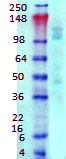
WB
PTPN2 is strongly supported by BioGPS gene expression data to be expressed in Jurkat
0.5 mg/ml
Cow: 100%; Dog: 100%; Guinea Pig: 100%; Horse: 100%; Human: 100%; Mouse: 100%; Rabbit: 100%; Rat: 100%; Yeast: 90%; Zebrafish: 93%
Liquid. Purified antibody supplied in 1x PBS buffer.
All conjugated antibodies should be stored in light-protected vials or covered with a light protecting material (i.e. aluminum foil) . Conjugated antibodies are stable for at least 12 months at 4C. If longer storage is desired (24 months), conjugates may be diluted with up to 50% glycerol and stored at -20C to -80C. Freezing and thawing conjugated antibodies will compromise enzyme activity as well as antibody binding.
39kDa
Shimizu, T., (2004) Exp. Hematol. 32 (11), 1057-1063
Wet Ice
353
PTPN2
PTPN2
Rabbit
Tyrosine-protein phosphatase non-receptor type 2
NM_080423
LEIRNESHDYPHRVAKFPENRNRNRYRDVSPYDHSRVKLQNAENDYINAS
Beschrijving
PTPN2 Antilichaam - N-terminaal gebied: Biotine (ARP45362 T100-Biotine) Beschikbaar in 100 µL. Bestel eenvoudig online met snelle levering.
Specificaties
Recent bekeken producten
Anti- Protein A Antibody
GWB-E66F30
1 mL
Recombinant TAFV GP1 Protein, C-Fc
EVV03609
100 μg
Gabbr1 Mouse Monoclonal Antibody [Clone ID: S93A-49]
TA326530
100 µg
BSA-Myc/DDK Control Protein
AR100025
50 µL
NH-6
ABC-TC0826
1 Vial
Anti-TAT (Thrombin-antithrombin) Antibody
ABS 014-22-1
1000 µL
Anti-APOE2 mouse monoclonal antibody
TD-AB0132
100 µg
CD35 (CR1) mouse monoclonal antibody, clone J3D3, Azide Free
BM2364
0.2 mg