

RAD23B Polyklonale Antilichaam
Kwaliteit
ISO Gecertificeerd
Levering
24-48 uur
Technische Specificaties
Multiubiquitin chain receptor involved in modulation of proteasomal degradation. Binds to polyubiquitin chains. Proposed to be capable to bind simultaneously to the 26S proteasome and to polyubiquitinated substrates and to deliver ubiquitinated proteins to the proteasome. May play a role in endoplasmic reticulum-associated degradation (ERAD) of misfolded glycoproteins by association with PNGase and delivering deglycosylated proteins to the proteasome. Involved in global genome nucleotide excision repair (GG-NER) by acting as component of the XPC complex. Cooperatively with CETN2 appears to stabilize XPC. May protect XPC from proteasomal degradation. The XPC complex is proposed to represent the first factor bound at the sites of DNA damage and together with other core recognition factors, XPA, RPA and the TFIIH complex, is part of the pre-incision (or initial recognition) complex. The XPC complex recognizes a wide spectrum of damaged DNA characterized by distortions of the DNA helix such as single-stranded loops, mismatched bubbles or single-stranded overhangs. The orientation of XPC complex binding appears to be crucial for inducing a productive NER. XPC complex is proposed to recognize and to interact with unpaired bases on the undamaged DNA strand which is followed by recruitment of the TFIIH complex and subsequent scanning for lesions in the opposite strand in a 5'-to-3' direction by the NER machinery. Cyclobutane pyrimidine dimers (CPDs) which are formed upon UV-induced DNA damage esacpe detection by the XPC complex due to a low degree of structural perurbation. Instead they are detected by the UV-DDB complex which in turn recruits and cooperates with the XPC complex in the respective DNA repair. In vitro, the XPC:RAD23B dimer is sufficient to initiate NER; it preferentially binds to cisplatin and UV-damaged double-stranded DNA and also binds to a variety of chemically and structurally diverse DNA adducts.
P58; HR23B; HHR23B; UV excision repair protein RAD23 homolog B; XP-C repair-complementing complex 58 kDa protein; RAD23B
5887
P54727
Cytoplasm, Nucleus
• Rabbit
Human, Mouse
24-120/409
RAD23B
• Polyclonal
• IgG
Unconjugated
KLH conjugated synthetic peptide derived from human hHR23b
WB, ELISA, IHC-P, IHC-F, IF (IHC-P), IF (IHC-F), IF (ICC)
Purified by Protein A.
1µg/µl
WB (1:300-5000), ELISA (1:500-1000), IHC-P (1:200-400), IHC-F (1:100-500), IF (IHC-P) (1:50-200), IF (IHC-F) (1:50-200), IF (ICC) (1:50-200)
0.01M TBS (pH7.4) with 1% BSA, 0.02% Proclin300 and 50% Glycerol.
Unmodified
Shipped at 4°C. Store at -20°C for one year. Avoid repeated freeze/thaw cycles.
5887
Rat, Dog, Pig, Rabbit
Beschrijving
RAD23B Polyklonale Antilichaam Beschikbaar in 100 µL. Bestel eenvoudig online met snelle levering.
Specificaties
Recent bekeken producten
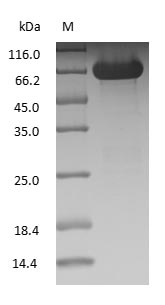
Rat Serum Albumin
CSB-NP000101r-01
1 mg
Denhardt's Solution (50X)
EC-915
50 mL
FKBP4, ID (FK506-binding Protein 4, Peptidyl-prolyl cis-trans Isomerase FKBP4, PPIase FKBP4, Rotamase, HSP-binding Immunophilin, HBI, FKBP52 Protein, 52kD FK506-binding Protein, 52kD FKBP, FKBP-52, 59kD Immunophilin, FKBP59, p59 Protein, FKBP-4, FKBP52)
MBS623609-01
0.2 mL
West Nile Virus, NS3 Protease (WNV)
MBS603723-01
0.1 mg
Human Sertoli Cell Complete Medium
MBS2576755-01
100 mL
Urobilinogen protein
MBS5303823-01
100 mg
AffiniPure Goat Anti-Rabbit IgG H&L, HRP conjugated
GTR17765564-01
100 µL
Pribolab® Automatic Immunoaffinity Column Purification System
HWEQ-IM 5050
1 Unit
Recent gezochte producten
Rabbit Polyclonal BDNF Antibody
NBP1-46750-0.025mL
0.025 mL
Total BDNF Quantikine ELISA Kit
DBNT00
96 Tests
Quantikine Immunoassay Control Set 885 for Total BDNF
QC218
1 Set
Total BDNF Quantikine SixPak (6 Plates)
SBNT00
6x 96 Tests
Polyclonal BDNF Antibody (CT)
APG02267G
0.1ml
Polyclonal BDNF Antibody
APG02253G
0.05mg
Polyclonal BDNF Antibody
APG02256G
0.1mg
Polyclonal BDNF Antibody
APG02257G
0.05ml